Is the world of opera becoming more inclusive? A new documentary, featuring conductor Antonio Pappano, explores the mission to open up the art form to everyone.
Conductor Sir Antonio Pappano is renowned for being a warm-hearted “people person”. But there’s one thing that makes his blood run cold: when he hears opera being accused of being an art form that’s only for a wealthy elite. “I get very offended by people who say we’re elitist,” he says passionately in a new documentary. This is “a misconception that totally distorts the image of opera,” he adds. “The fact of the matter is, it’s harder to get into a football game in London than it is to get into the [Royal] Opera House.”
This allusion to the beautiful game is not a frivolous one. When Pappano became music director at the Royal Opera House, Covent Garden (ROH) in 2002, he spoke of his love for popular music by stars such as Frank Sinatra, Tony Bennett, Oscar Peterson, Joni Mitchell, and for musicals. “I like football too,” he added. “Does that mean you can’t like opera?”
 Getty Images
Back then Pappano was 42, and the youngest conductor to lead ROH’s orchestra. Some 700 operas later – with many productions of the French and Italian repertoires; a good part of the Russian; Wagner, Strauss and contemporary works – and he is the subject of A Time of Change, presented by Zeinab Badawi, and part of the BBC documentary series Take Me to the Opera.
The documentary follows him from his modest roots, as the son of Italian immigrant parents who came from southern Italy to the UK, who worked hard to make ends meet. They passed on their strong work ethic to him, and he learnt how to work with singers from his vocal coach father, flourishing as a musical talent in the “the family business”. A Time of Change goes on to trace a career that includes assisting classical pianist Daniel Barenboim, through to a recent high, conducting the King’s coronation service in May, featuring solos by Welsh baritone Bryn Terfel and South African soprano Pretty Yende.
Opera shouldn’t cater just to one audience – it must be open to the interests of many different people – Antonio Pappano
The main focus of the film, though, is Pappano’s mission to open up opera to everyone. “Opera shouldn’t cater just to one audience, or be focused on just one corner of the repertoire,” he says. “It must be open to the interests of many different people.” While he asserts that the ROH, like every big opera house, wants to entice young audiences, he does concede: “I think you have to be honest and say, yes, but younger people can’t afford very expensive tickets, can they?”
It’s true that the price of opera tickets can seem too high to be anything but a rare luxury for most, especially young people. Halley Bondy, writing on the arts website Paste Magazine, describes herself as someone who has been to the opera many times “for a millennial”. And although she loves opera – “from the hyper-real grandness to the unbelievable talent, to the septuagenarian, fur-hatted audience” – she finds it “easy to see why places like The Met [Metropolitan Opera House in NYC] are ailing in sales; young people just don’t go. It’s too expensive, too arcane, too massive… The onus is on the opera houses to do a better job of catering to the young.”
Bondy has only managed to attend so often by being treated by a “ridiculously generous friend” or chasing discounted tickets. “Like everything else in the world, the opera is a lot of fun if you have gobs of money,” she observes, but she concedes anyone could get in with the $25 [£19.40] rush tickets, student tickets or commercial offers – which make it “affordable, if you just dig a little”.
In opera’s defence, ticket prices are generally high because it is notoriously costly to produce. All the more reason, argued The Guardian’s Charlotte Higgins in February, for adequate government funding. Discussing recent cuts to opera funding, she wrote: “If you starve something, run it down constantly, gradually reduce the provision of it so that few can afford it, it becomes ‘elitist’… And if opera in the form that its creators imagine it becomes for toffs, that is nothing to do with opera itself… [it is] precisely the result of neglect and underfunding”.
 Royal Opera House
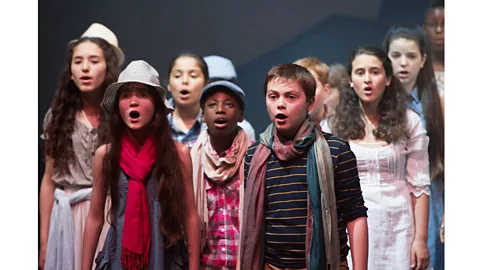
Pappano is also invested in bringing new blood to opera, via schemes like the ROH’s schools matinees, which offer young people low-cost tickets to opera productions. Also, its Youth Opera talent development programme gives children aged seven to 13 the chance to try its “rigorous music and drama training”.