Glyndebourne isn’t the only opera company taking steps towards sustainability. It is now usual among major opera houses, from the English National Opera to Opéra National de Paris, to boast a dedicated webpage outlining their sustainability mission statements, including pledges to adhere to the UN sustainable development goals, facts and figures relating to their reduced energy consumption and carbon emissions, and details of their own planet-friendly solutions.
The rooftop of the Opéra Bastille, for example, is host to an urban farm, cultivated using agroecology, which also contributes to the thermal insulation of the building. This produces around a hundred weekly baskets of fruit and vegetables that are then sold to staff and local residents.
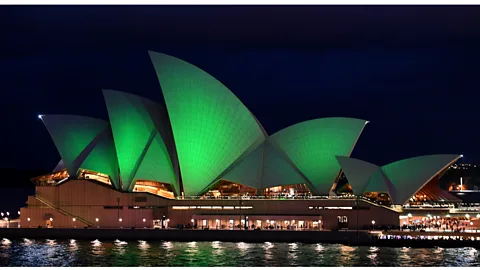
The Sydney Opera House has installed an artificial reef alongside the iconic building’s sea wall, encouraging marine biodiversity
The Sydney Opera House – a longstanding champion of environmental consciousness that achieved carbon neutrality in 2018 – has installed an artificial reef alongside the iconic building’s sea wall, encouraging marine biodiversity and supporting Sydney Harbour’s native species. Most recently, the opera house was awarded a six-star performance rating by the Green Building Council of Australia, the highest possible ranking. This is no mean feat given that perhaps the biggest challenge facing opera is achieving energy efficiency within its decades-, if not centuries-old, buildings. Indeed, in 2021, a survey by the UK’s Theatres Trust found that it would cost more than £1bn ($1.2bn) to make the UK’s theatre buildings sustainable.
 Getty Images
In the meantime, many companies have been looking to achieve sustainability through new buildings, while doing what they can to reduce waste in their pre-existing spaces. The Royal Opera House’s production workshop just outside London, built in 2015, is in the top 10% of sustainable non-domestic buildings in the UK. While Milan’s storied opera house La Scala’s new office is a zero-energy building, producing more energy than it consumes thanks to rooftop solar panels and an open-cycle geothermal system. La Scala has also cut its carbon emissions by more than 630 tonnes since 2010, according to a recent New York Times article, having upgraded to LED and smart lighting.
Elsewhere, the Opéra de Lyon, Göteborg Opera and Tunis Opera are currently partnered on a new project investigating how best to implement the circular economy of production materials, while Leeds’ Opera North is soon to launch its first “green season”, using shared set design across its three productions, recycled or second-hand costumes, and including a new “eco-entertainment” work titled Masque of Might.
As the Theatres Trust’s study shows, there is still a long way to go, and a lot of money required, to make the changes necessary to safeguard the future of opera amid the ever-worsening climate crisis, but there appears to be no shortage of determination and imagination among opera houses in their quest to do so.